+251-116-463-357
  2302
2302
Monday to Friday 8:30 Am to 5:30 Pm
 +251-116-463-357 2302
 Monday to Friday 8:30 Am to 5:30 Pm
Ethiopia's geological conditions have been favorable for the formation of various mineral deposits mainly gold, tantalum, phosphorus, iron, salt, potash, soda ash, gemstones, coal, geothermal and natural gas, apart from many industrial and construction materials. Other mineral resources are platinum, niobium, copper, nickel, manganese and molybdenum; marble is found extensively in most parts of the country. Mineral exploration began in the late 1890’s by foreign companies. However, modern mineral exploration started in 1968 with the founding of the Geological Survey of Ethiopia (GSE) in collaboration with United Nations Development Program (UNDP).
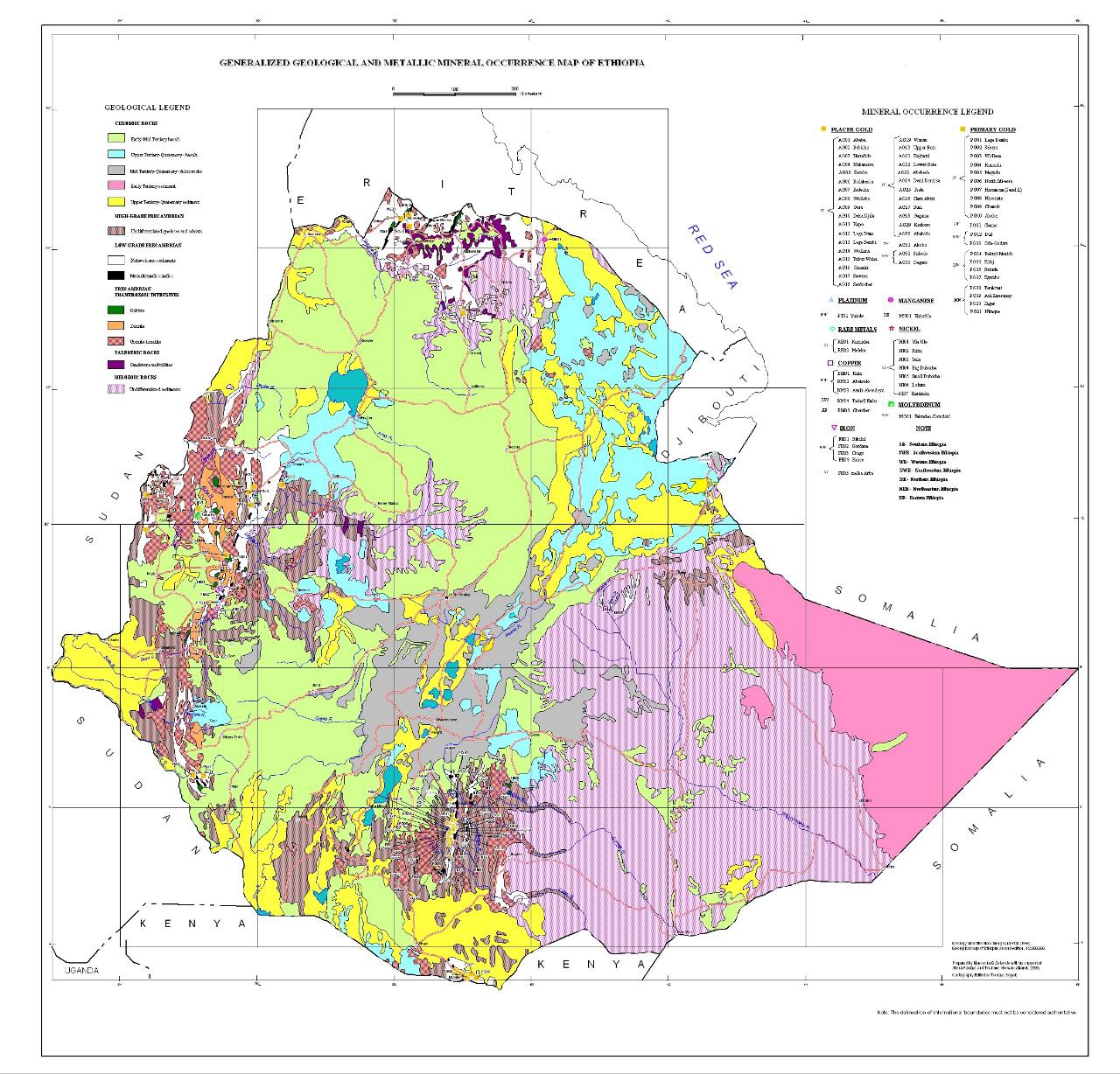
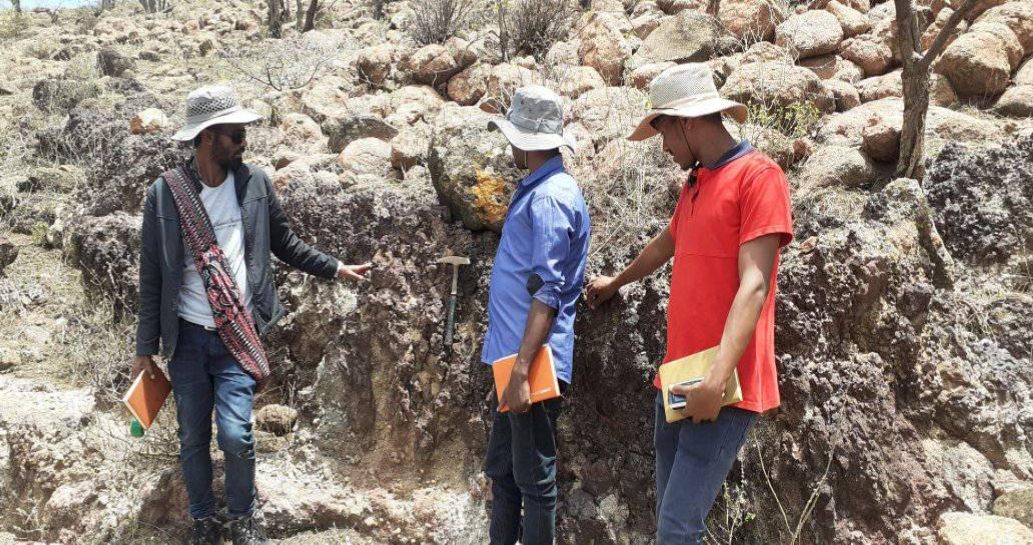
Locating the mineral resource of the country Delineating ore body and estimating reserves with available resources Evaluate the economic mineral potential of the country by conducting reconnaissance, follow-up and detailed exploration
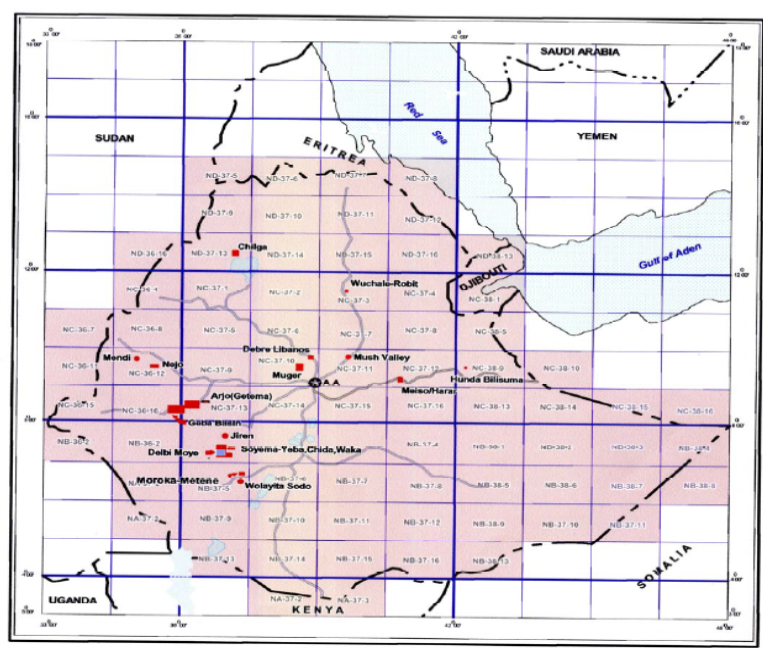
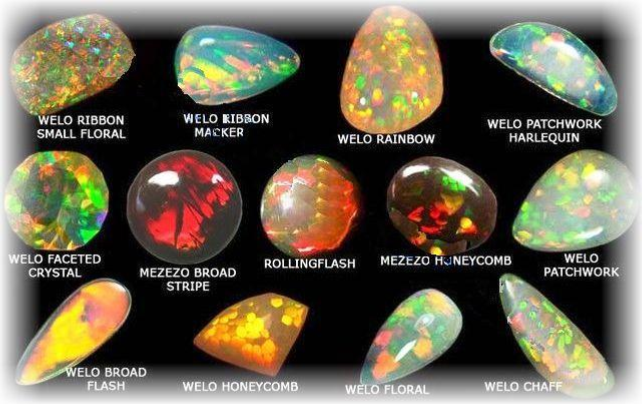
Gemstone the of country can be grouped into two main belts; the southern and Central north Ethiopia main belts and western and Eastern Ethiopia minor belts. Notes: The southern and Central Ethiopia main belts–which are further classified into (1)Moyle-Mega-Yabello/MMY/ gemstone belts and II) Mozozo-Wollo-Gonder gemstone belts..
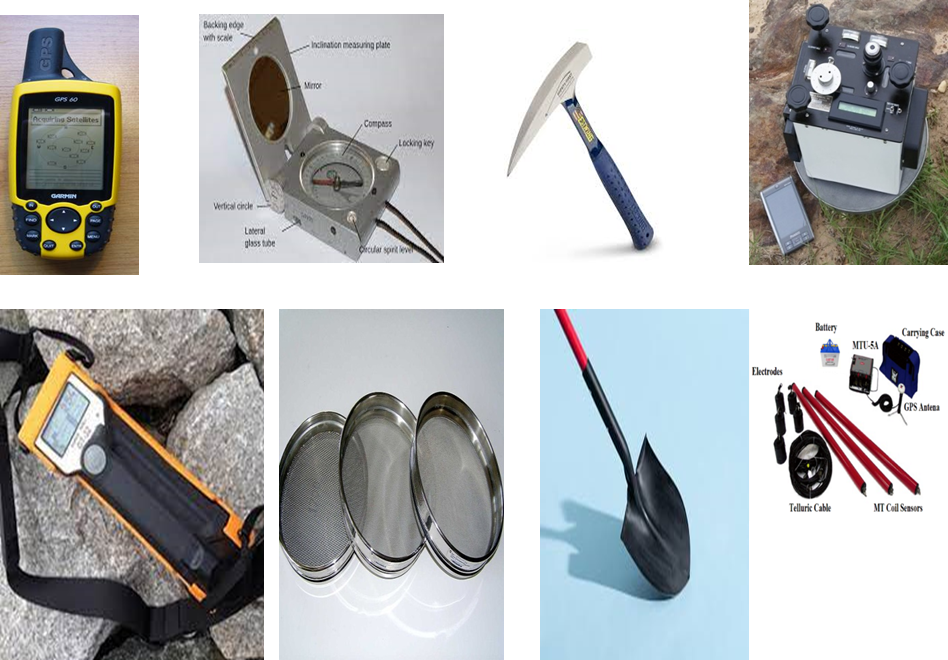
GPS Compass Digital Camera Hammer Magnetometer Radiometric Gravymetric Topo map Shovel Mesh/sieve Hand lens
Previews data compilation GIS and satellite image interpretation Geological methods Geophysical methods Geochemical methods Drilling methods